
TL;DR:
- Holistic therapy treats mind, body, and relationships to support trauma healing.
- It is most effective when combined with evidence-based trauma treatments.
- California offers accessible, licensed, and integrative options suited to individual needs.
Talk therapy has helped millions of people work through anxiety, depression, and trauma. But for many Californians, sitting in a chair and talking about their pain only goes so far. When emotional wounds live in the body as muscle tension, shallow breathing, or a racing heart, words alone can feel inadequate. Holistic therapy fills that gap by treating the whole person: mind, body, and relationships together. This guide breaks down what holistic therapy really is, who benefits most, how it fits alongside evidence-based care, and how to get started safely and affordably in California.
Table of Contents
- What is holistic therapy? Basics and myths clarified
- When holistic therapy makes sense: Who benefits and why
- How holistic therapy supports evidence-based care
- Getting started: Choosing holistic therapy in California
- A fresh take: The unspoken truth about seeking holistic therapy
- Next steps: Find the right support for your journey
- Frequently asked questions
Key Takeaways
| Point | Details |
|---|---|
| Core is integration | Holistic therapy works best when complementing—not replacing—evidence-based approaches for trauma and mental health. |
| Addresses body and mind | Holistic methods are especially helpful when emotional pain is also physical or words don’t come easily. |
| Be an informed seeker | Check provider credentials and ensure you’re receiving safe, integrative care rather than unproven standalone treatments. |
| California has options | Accessible, affordable holistic and integrative care is growing in California, especially for trauma recovery and emotional regulation. |
What is holistic therapy? Basics and myths clarified
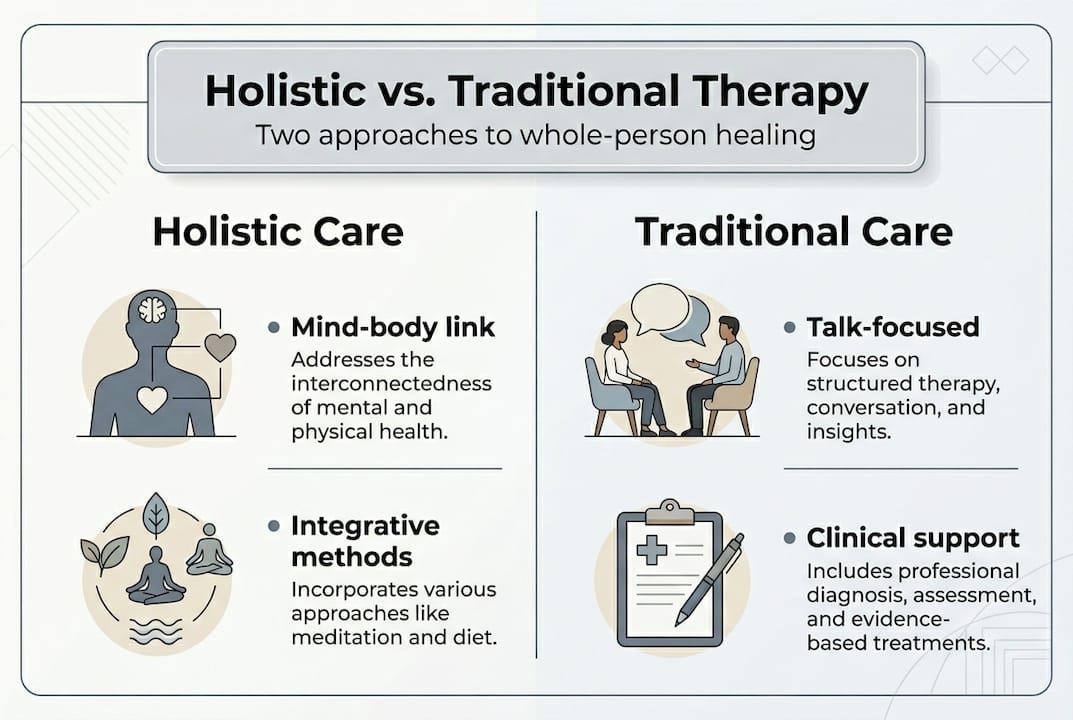
Holistic therapy is not a single technique. It is a framework that views mental health as deeply connected to physical wellbeing, social relationships, and lived experience. A holistic therapist might combine breathwork with cognitive tools, or pair somatic body awareness exercises with standard talk therapy, depending on what you need most.
The holistic approach to health recognizes that healing cannot happen in isolation. Tension stored in your shoulders, a gut that tightens before a difficult conversation, sleep disrupted by flashbacks: these are not separate from your mental health. They are your mental health, showing up through the body.
Common holistic methods you might encounter include:
- Mindfulness and meditation to build awareness of thoughts without being overwhelmed by them
- Somatic therapy to process trauma stored physically in the nervous system
- Yoga and movement therapy to reconnect mind and body
- Breathwork (also called pranayama or controlled breathing techniques) to regulate the autonomic nervous system
- Art therapy and expressive arts to externalize internal experiences without needing words
- Play therapy for children who cannot yet name what they feel
- EMDR (Eye Movement Desensitization and Reprocessing) which straddles the line between evidence-based and integrative practice
Now, about that myth that holistic therapy means unscientific or experimental. That is not entirely accurate, but it is not entirely wrong either. Some holistic modalities, like mindfulness-based stress reduction (MBSR) and EMDR, have strong research backing. Others, including some newer adjunctive treatments, are still being studied. The APA guidelines on PTSD treatment are clear: evidence-based approaches like Cognitive Processing Therapy (CPT), Prolonged Exposure (PE), and Trauma-Focused CBT (TF-CBT) remain the gold standard, with holistic methods best used as complements rather than replacements.
“Integrative care that pairs proven trauma therapies with body-based and mindfulness approaches often produces better outcomes than either approach alone, especially for individuals who find talk therapy alone insufficient.”
The strongest use of holistic therapy is not as an alternative to medical or psychological care. It is as a bridge, a way to stay engaged in healing when traditional approaches feel limited or out of reach. Exploring the range of therapy options in California can help you understand how these modalities are currently being offered within integrative clinical settings.
When holistic therapy makes sense: Who benefits and why
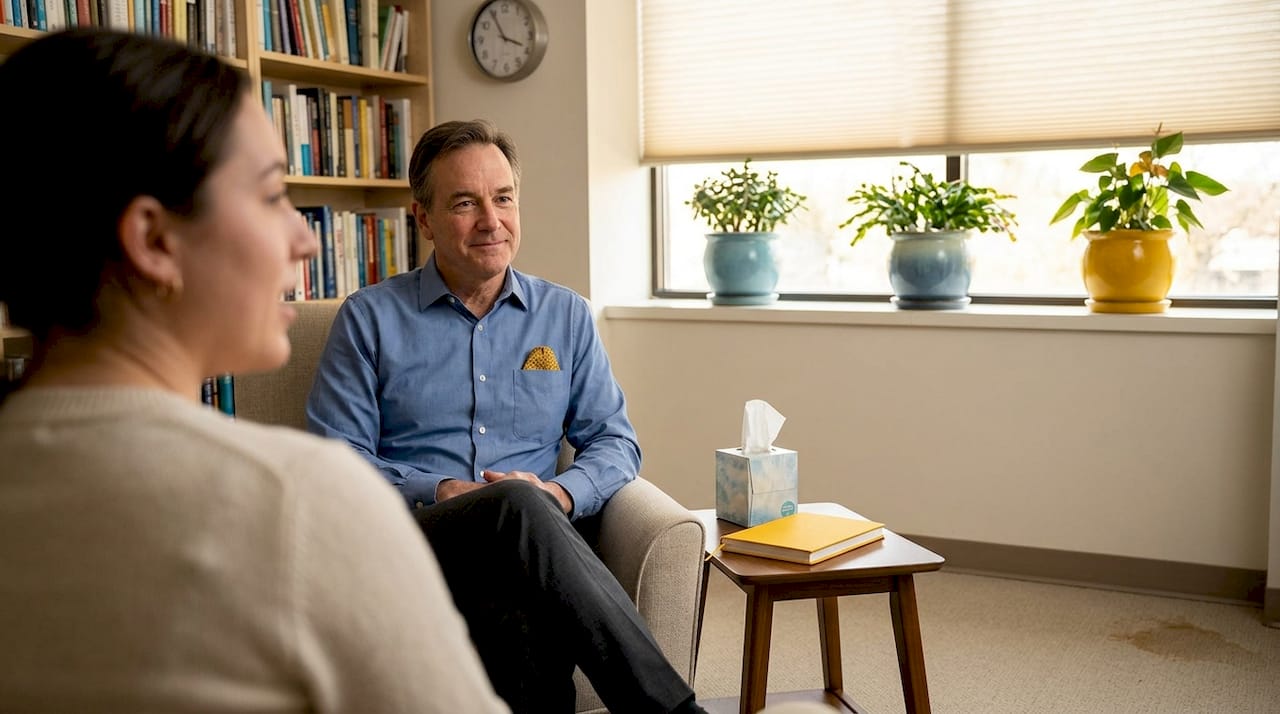
Not everyone who walks into therapy needs the same thing. Some people process pain well through conversation. Others freeze, go blank, or feel their body shut down the moment they try to talk about what happened. That physical response is not weakness. It is the nervous system doing exactly what it was designed to do when a threat feels too close.
Research published in a 2025 review of holistic interventions for trauma populations found compelling evidence for specific groups. For veterans with PTSD, Emotional Freedom Techniques (EFT) showed a standardized mean difference of SMD of 1.159 for symptom reduction, a significant finding. Children who cannot verbalize their trauma often make meaningful progress through play and creative therapies. And for survivors of complex or early childhood trauma, somatic approaches can access what language cannot reach.
Here is a breakdown of who tends to benefit most:
| Population | Holistic approach most useful | Why it helps |
|---|---|---|
| Trauma survivors | Somatic therapy, EMDR, breathwork | Trauma lives in the body, not just the mind |
| Children and teens | Play therapy, art therapy, movement | Bypasses verbal limitations |
| Veterans with PTSD | EFT, yoga, mindfulness | Strong evidence for symptom reduction |
| Anxiety and panic | Breathwork, MBSR, body scan | Directly calms the nervous system |
| Chronic stress | Yoga, mindfulness, expressive arts | Addresses physical and emotional load |
| Survivors of abuse | Somatic experiencing, creative therapy | Rebuilds body safety without forcing narrative |
There is also a group that is often overlooked: people recovering from birth trauma, including postpartum PTSD. Body-based and relational approaches can be especially supportive here, where the trauma is tied to physical experience and often accompanied by shame or isolation.
Here is how to think through whether holistic therapy might be right for you:
- Notice where your pain lives. If you feel it physically, as tension, nausea, disconnection, your body may need to be part of the healing.
- Assess what has not worked. If you have tried talk therapy and hit a wall, a somatic or creative approach may open a new door.
- Consider your communication style. People who struggle to put feelings into words often respond better to experiential or body-based methods.
- Think about your diagnosis. Some conditions, like complex PTSD or trauma with strong somatic symptoms, respond especially well to integrative approaches.
- Factor in your age or stage. Children, teens, and elderly individuals sometimes benefit more from non-verbal therapeutic formats.
Pro Tip: You do not have to choose between talk therapy and holistic approaches. Many of the most effective healing paths combine both. Talk to your current therapist about adding a body-based or creative element before switching approaches entirely.
Understanding the role of therapy in trauma recovery can help you see how different modalities serve different moments in the healing process, not as competing options but as tools in a shared toolbox.
How holistic therapy supports evidence-based care
Here is where it gets nuanced, and where a lot of well-meaning people get it wrong. Holistic therapy works best when it runs alongside evidence-based care, not instead of it. The APA’s current guidelines on PTSD are specific: CPT, PE, and TF-CBT have the most robust evidence for trauma treatment. Holistic approaches support, extend, and sometimes enhance that work, but they do not replace it for severe or complex presentations.
Think of it this way. A surgeon addresses the injury directly. Physical therapy helps you regain function and live well after. Both matter. Neither alone is the complete answer.
| Therapy type | Role | Evidence level | Best used for |
|---|---|---|---|
| CPT, PE, TF-CBT | Core trauma treatment | Strong (APA recommended) | Active PTSD, trauma processing |
| EMDR | Integrative trauma processing | Strong | Trauma memories, phobias |
| Mindfulness/MBSR | Adjunctive support | Moderate to strong | Stress, anxiety, emotional regulation |
| Yoga therapy | Adjunctive support | Moderate | Body reconnection, chronic stress |
| Art and play therapy | Adjunctive support | Moderate | Children, non-verbal processing |
| EFT (tapping) | Emerging | Growing evidence | PTSD symptom management |
| Ketamine/MDMA adjuncts | Experimental | Limited, still being studied | Resistant PTSD (clinical trials only) |
The benefits of mindfulness therapy are particularly well-documented for anxiety and emotional regulation. Mindfulness practice does not just calm you in the moment. Over time, it literally changes how the brain responds to stress, building greater resilience between therapy sessions.
The key risks to watch for:
- Using holistic methods as the only treatment for serious conditions like severe depression, active psychosis, or complex PTSD without medical oversight
- Choosing practitioners who discourage medical or psychiatric care outright, this is a serious red flag
- Assuming emerging therapies are proven just because they are being discussed widely in wellness spaces
- Delaying appropriate clinical care while experimenting with unproven approaches
Revive Health Therapy integrates evidence-based trauma therapies with holistic methods thoughtfully. You can learn more about the full range of therapeutic modalities used in California clinical settings to understand what a genuinely integrative practice looks like in practice.
Getting started: Choosing holistic therapy in California
California has one of the most varied mental health landscapes in the country, which is both an advantage and a challenge. There are exceptional integrative practitioners here. There are also wellness providers who use therapeutic language without clinical training. Knowing how to tell the difference protects you.
Follow these steps to get started safely:
- Verify licensure first. In California, look for licensed clinical social workers (LCSWs), licensed professional clinical counselors (LPCCs), marriage and family therapists (MFTs), or psychologists (PhDs/PsyDs). A license means professional accountability.
- Ask directly about their integrative approach. A skilled holistic therapist will explain how they combine methods and how those methods fit your specific needs, not offer a generic wellness menu.
- Check that they do not dismiss evidence-based care. A trustworthy integrative therapist respects and often incorporates clinical standards. If they tell you medication or conventional therapy is never needed, walk away.
- Start with a consultation. Most therapists offer an initial call. Use it to ask about their training in specific modalities and how they would approach your situation.
- Talk to your existing providers. If you are already working with a psychiatrist, primary care doctor, or therapist, loop them in before adding a new modality.
- Explore telehealth options. California’s telehealth landscape has expanded dramatically. This gives you access to specialized integrative therapists beyond your immediate geographic area.
Research on holistic interventions for trauma populations consistently shows that outcomes are better when integrative methods are offered within a structured clinical relationship, not just a drop-in wellness class.
Pro Tip: California’s sliding-scale therapy options, HSA and FSA-eligible services, and telehealth platforms make holistic integrative care more accessible than most people realize. Do not assume cost is a barrier before you explore what is available.
If you are looking for a practical starting point, resources like this guide on how to find a holistic trauma therapist can walk you through what to look for and how to navigate the search without feeling overwhelmed.
A fresh take: The unspoken truth about seeking holistic therapy
Here is something the wellness industry rarely admits, and the clinical world rarely says out loud either. A lot of people turn to holistic therapy not because they have researched it thoroughly, but because they feel profoundly unseen by traditional care.
They sat in a therapist’s office, talked for 50 minutes about what happened to them, and walked out feeling like something essential was left untouched. Maybe they were more articulate than ever about their pain, and yet the pain did not move. That experience is real and valid, and it deserves to be taken seriously.
The mind-body gap in mainstream mental health care is wider than most practitioners acknowledge. We have built entire systems around verbal processing, and those systems help millions of people. But they were largely designed for and tested on populations that were comfortable with language as the primary vehicle for healing. For people whose trauma happened before they had words, whose cultural background made verbal disclosure difficult or unsafe, or whose nervous system responds to threat by going silent rather than speaking, the talk-first model has real limitations.
California’s mental health landscape is uniquely positioned to address this. The state has a long tradition of integrating diverse healing frameworks, from mindfulness-based approaches rooted in Buddhist practice to somatic therapies developed by clinicians who noticed what standard CBT was missing. That diversity is a genuine strength. But it also creates risk.
When people feel let down by conventional care, they sometimes move toward approaches that feel powerful but lack oversight. Charismatic practitioners without clinical training can appear deeply knowledgeable, especially to someone who is already vulnerable and desperate for something that works. The uncomfortable truth is that the most dangerous moment in someone’s holistic therapy journey is often the beginning, when desperation outpaces discernment.
The answer is not to avoid holistic therapy. It is to enter it with your eyes open, asking good questions, keeping your clinical team in the loop, and recognizing that the most effective healing paths are rarely either-or. Exploring different trauma therapy types alongside holistic options gives you the clearest picture of what a genuinely integrated approach can look like.
The goal is not to find the one right method. It is to build a healing environment where your whole self, body, mind, relationships, and history, has room to recover.
Next steps: Find the right support for your journey
Holistic therapy works best when it is part of a thoughtful, personalized care plan rather than a standalone fix. If you are ready to explore what integrative mental health support looks like in practice, you do not have to figure it out alone.
At Revive Health Therapy, we believe that understanding why seek psychotherapy starts with recognizing that no single approach fits every person or every story. Our therapists are trained in trauma-informed care and draw from both evidence-based methods and holistic practices to meet you where you are. Whether you are in Walnut Creek, Oakland, or anywhere in California via telehealth, we offer sliding-scale fees, insurance support including HSA and FSA plans, and genuine flexibility. Explore the trauma-informed therapy benefits that our clients experience, or browse our full range of evidence-based therapy options to find the approach that fits your life.
Frequently asked questions
Is holistic therapy safe for trauma recovery?
Holistic therapy is generally safe when used alongside evidence-based care, but the APA guidelines on PTSD caution against using it as the only treatment, particularly for severe trauma where CPT, PE, or TF-CBT have stronger evidence.
What’s the biggest difference between holistic and traditional therapy?
Traditional therapy primarily focuses on changing thought patterns and processing emotions verbally, while holistic therapy also addresses physical sensations, creative expression, relationships, and the nervous system as part of healing.
Can holistic therapy help if talking doesn’t?
Yes, research on holistic interventions for trauma shows that somatic, play, and art-based therapies can support meaningful healing when verbal therapy alone has not been enough, particularly for children and trauma survivors.
Are there affordable holistic therapy options in California?
Many integrative therapists in California offer sliding-scale fees, and some services are covered through insurance, HSA, or FSA plans, making holistic care more financially accessible than most people expect.
How do I choose a holistic therapist?
Look for a licensed mental health professional who incorporates holistic practices as part of a broader clinical framework, asks about your full history, and never discourages you from seeking medication or other necessary medical care.