
TL;DR:
- Psychodynamic therapy helps individuals explore unconscious thoughts and early experiences that influence their current behavior. It targets root causes such as childhood conflicts and defense mechanisms, leading to long-lasting emotional change. This approach effectively addresses various conditions, including anxiety, depression, and trauma, with improvements continuing well after therapy ends.
Psychodynamic therapy is defined as a talk-based treatment that helps people explore unconscious thoughts, early relational experiences, and hidden emotional patterns driving present-day behavior. The role of psychodynamic therapy goes far beyond symptom relief. It targets the root causes of distress, including unresolved childhood conflicts, defense mechanisms like repression and projection, and recurring relational patterns that quietly shape how you think, feel, and connect with others. Research shows effect sizes rising from 0.97 to 1.51 at long-term follow-up, making this one of the most durable approaches in mental health care. Revivehealththerapy integrates psychodynamic principles into evidence-based care for adults, teens, and families across California.
How does psychodynamic therapy work to promote emotional healing?
Psychodynamic therapy works by creating a safe, open-ended space where unconscious material can surface naturally. Unlike structured approaches such as cognitive-behavioral therapy (CBT), sessions do not follow a fixed agenda or include homework assignments. Instead, free association guides sessions, meaning you speak freely about whatever comes to mind, allowing hidden themes to emerge without censorship or direction.
Three core mechanisms drive the therapy’s effectiveness:
- Transference: You unconsciously project feelings about past relationships onto your therapist. This creates a live relational space where unresolved conflicts can be examined in real time. Transference as a therapeutic tool gives both you and your therapist direct access to the emotional patterns that shape your relationships outside the room.
- Defense mechanisms: Behaviors like repression, denial, and projection are not treated as failures. Defenses are adaptive responses that once protected you. Therapy explores whether those defenses still serve your current well-being or whether they now limit your growth.
- Countertransference: Your therapist’s emotional reactions to you also carry information. A skilled clinician uses those reactions as data, not noise, to deepen understanding of your relational world.
This approach differs sharply from CBT, which targets specific thought patterns and behaviors through structured exercises. Psychodynamic therapy targets the underlying emotional architecture. It asks not just “what are you thinking?” but “why does this pattern keep appearing, and where did it begin?”
Pro Tip: If you find yourself reacting strongly to your therapist, whether with frustration, idealization, or avoidance, do not dismiss it. That reaction is often the most valuable material in the room.
The therapy’s slower pace is intentional. Unconscious defenses do not dissolve on command. They surface gradually when the therapeutic relationship feels safe enough to hold them.
What conditions does psychodynamic therapy effectively address?
Psychodynamic therapy addresses anxiety, depression, personality disorders, and PTSD by targeting the unconscious conflicts and early relational themes that sustain those conditions. This is not a narrow-band treatment. The research base covers a wide range of presentations, and the outcomes are clinically significant.
| Condition | How psychodynamic therapy helps |
|---|---|
| Anxiety | Uncovers unconscious fears and relational triggers beneath surface worry |
| Depression | Explores grief, loss, and internalized self-criticism rooted in early experience |
| Personality disorders | Addresses rigid relational patterns and identity conflicts at their source |
| PTSD | Works through traumatic relational memories and fragmented emotional responses |
| Relationship difficulties | Identifies recurring interpersonal patterns tied to attachment history |
What separates psychodynamic therapy from symptom-focused treatments is its goal. Symptom reduction is a byproduct, not the primary target. The primary target is the unconscious conflict generating the symptom. When that conflict shifts, symptoms ease and stay eased.
The long-term follow-up data supports this. An effect size of 0.97 at treatment end rising to 1.51 after nine or more months means people continue improving after therapy ends. That pattern is rare in mental health research. It reflects genuine structural change rather than temporary symptom management.
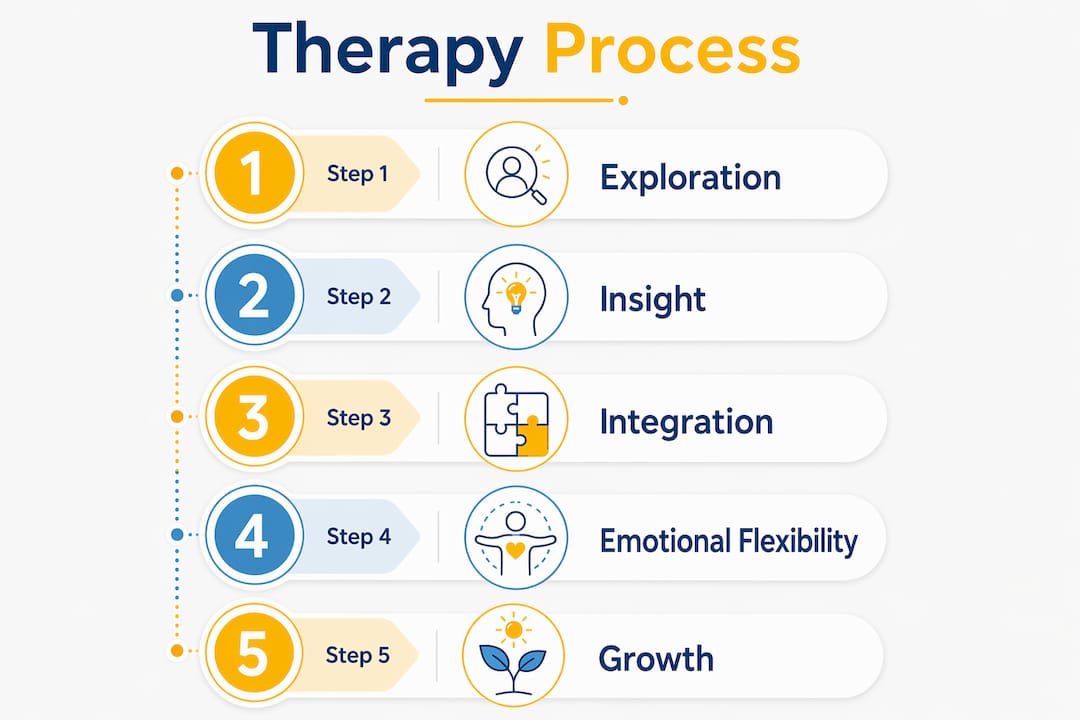
Psychodynamic therapy also builds emotional flexibility. People who complete this work tend to tolerate distress better, form more secure relationships, and respond to stress with greater self-awareness. Those gains compound over time rather than fading.
What does a typical psychodynamic therapy process look like?
The structure of psychodynamic therapy is deliberately open, but it follows a recognizable rhythm. Here is what to expect at each stage:
- Initial sessions: You and your therapist establish the therapeutic relationship and begin identifying recurring emotional themes. There is no intake questionnaire to complete between sessions. The work happens in the room.
- Early middle phase: Patterns start to emerge. You may notice the same relational dynamic appearing in different contexts, at work, in friendships, in the therapy room itself. Your therapist names these patterns without judgment.
- Deep middle phase: Transference reactions become more visible. This is often the most uncomfortable and most productive phase. Unconscious material surfaces, and the therapeutic relationship becomes the primary vehicle for change.
- Termination phase: Ending therapy is treated as a meaningful event, not an administrative step. How you experience the ending often mirrors how you experience loss and separation in life, making it rich material for final work.
Session frequency runs once or twice weekly, with short-term formats spanning 16–30 sessions and longer open-ended formats available for deeper exploration. Short-term psychodynamic therapy suits people with a focused presenting concern. Long-term formats suit those working through complex trauma, personality-level patterns, or longstanding relational difficulties.
Pro Tip: Commit to at least 12 sessions before evaluating whether the therapy is working. Psychodynamic change is rarely linear. The most significant shifts often happen after a period of feeling stuck.
The sleeper effect is one of the most compelling features of this approach. Clients frequently report continued emotional growth months and even years after their final session. The internal changes set in motion during therapy keep developing long after the work formally ends.
What are the unique benefits of psychodynamic therapy?
The most distinctive benefit of psychodynamic therapy is durability. Insight and self-awareness cultivated in therapy lead to lasting changes in personality structure and interpersonal relationships, not just temporary relief from symptoms. That is a fundamentally different outcome than what most short-term therapies aim for.

Psychodynamic therapy also builds what researchers call emotional flexibility, the ability to experience difficult feelings without being overwhelmed by them or shutting them out entirely. People who develop this capacity handle conflict, loss, and uncertainty more effectively. They also tend to form more satisfying relationships because they understand their own relational patterns clearly.
Unconscious forces that shape daily life become visible through this work. Once visible, they lose their automatic power. A person who previously withdrew from intimacy out of unconscious fear of abandonment can begin to make conscious choices instead. That shift is not cosmetic. It changes the trajectory of relationships, careers, and self-perception.
The therapy also reduces maladaptive defense mechanisms over time. Repression, projection, and intellectualization served a purpose at some point. Therapy does not attack those defenses. It helps you understand what they were protecting and whether you still need that protection. When the answer is no, the defense softens naturally.
Compared to purely symptom-focused approaches, psychodynamic therapy targets a deeper layer of psychological functioning. The tradeoff is time. The reward is change that holds.
Key Takeaways
Psychodynamic therapy produces durable emotional change by targeting unconscious conflicts, early relational patterns, and defense mechanisms rather than surface-level symptoms.
| Point | Details |
|---|---|
| Core mechanism | Free association and transference reveal unconscious patterns driving present behavior. |
| Conditions treated | Effective for anxiety, depression, PTSD, personality disorders, and relational difficulties. |
| Sleeper effect | Clients continue improving after therapy ends, with effect sizes rising to 1.51 at follow-up. |
| Session structure | Meets once or twice weekly; short-term runs 16–30 sessions; long-term is open-ended. |
| Lasting benefits | Builds emotional flexibility, self-awareness, and durable changes in personality structure. |
Why I think psychodynamic therapy deserves more credit than it gets
Psychodynamic therapy is often dismissed as slow, expensive, or outdated. That reputation is not accurate. Contemporary psychodynamic practice is evidence-based, actively researched, and effective across a wide range of disorders. The “outdated” label usually comes from people confusing modern psychodynamic therapy with classical Freudian analysis. They are not the same thing.
What I find most underappreciated is the role of the therapeutic relationship itself. The therapeutic alliance predicts outcomes more reliably than any specific technique. That means the quality of the human connection in the room matters more than the particular method being applied. Psychodynamic therapy is built around that relationship. Other modalities treat it as a helpful backdrop. Here, it is the instrument.
The patience this therapy requires is also misread as inefficiency. The slower pace is not a flaw. It is the mechanism. Unconscious material does not respond to urgency. It surfaces when safety is established and sustained. Rushing that process produces superficial change. Honoring it produces the kind of change that transforms how you relate to yourself and others for years after therapy ends.
If you are considering therapy and want relief that lasts, psychodynamic work is worth the investment of time. The research supports it. The clinical experience confirms it.
— Amy
Psychodynamic therapy support at Revivehealththerapy
Revivehealththerapy offers psychodynamic-informed therapy for adults, teens, and families across California, with clinicians trained to work with anxiety, depression, trauma, and relational difficulties at their root.
Whether you prefer in-person sessions in Walnut Creek or Oakland, or secure telehealth from anywhere in California, Revivehealththerapy provides flexible access to evidence-based psychotherapy that fits your schedule and budget. Sliding-scale fees and insurance acceptance, including HSA/FSA plans, make professional support genuinely accessible. If you are ready to move beyond symptom management and toward lasting emotional change, Revivehealththerapy’s clinicians are prepared to support that work. Learn more about psychotherapy options in California and take the first step toward deeper healing.
FAQ
What is the role of psychodynamic therapy?
Psychodynamic therapy’s role is to uncover unconscious conflicts, early relational patterns, and defense mechanisms that drive present-day emotional difficulties. It promotes lasting psychological change rather than short-term symptom relief.
How does psychodynamic therapy work differently from CBT?
Psychodynamic therapy uses free association and transference in unstructured sessions to explore unconscious themes, while CBT uses structured exercises to target specific thought patterns. Psychodynamic therapy focuses on root causes; CBT focuses on current symptoms.
Is psychodynamic therapy effective for anxiety?
Psychodynamic therapy for anxiety addresses the unconscious fears and relational triggers beneath surface-level worry, producing effect sizes comparable to CBT with gains that continue growing after treatment ends.
How long does psychodynamic therapy take?
Short-term psychodynamic therapy runs 16–30 sessions at one to two sessions per week. Long-term formats are open-ended and suited for complex trauma, personality-level patterns, or deep relational work.
What is the sleeper effect in psychodynamic therapy?
The sleeper effect means clients continue to improve emotionally after therapy ends, a pattern reflected in effect sizes rising from 0.97 at treatment completion to 1.51 at nine-month follow-up. This sustained growth is uncommon in symptom-focused therapies.
Recommended
- Role of Therapy in Trauma Recovery: Evidence and Impact – ReviveHealthTherapy
- Psychotherapy in trauma recovery: evidence-based options CA 2026 – Revive Health Therapy
- Why Seek Adult Therapy for Emotional Wellness – ReviveHealthTherapy
- Child Therapy: Healing Emotional Wounds Early – ReviveHealthTherapy