
Many California parents feel overwhelmed when their teen struggles with anxiety, depression, or trauma. Knowing where to begin and how to avoid early dropout can feel impossible. This guide provides evidence-based steps to confidently choose therapists, prepare your family, and navigate counseling effectively so your teen gets the support they need.
Table of Contents
- Understanding Evidence-Based Therapies For Teens
- Prerequisites: What You Need Before Starting Counseling
- How To Choose The Right Therapist In California
- Core Steps In The Counseling Process
- Common Mistakes And Troubleshooting
- Expected Results And Outcomes
- Cost And Affordability Considerations
- How Revive Health Therapy Supports Your Teen’s Journey
- Frequently Asked Questions About Starting Teen Counseling
Key takeaways
| Point | Details |
|---|---|
| Evidence-based therapies | CBT and Trauma-Focused CBT show significant symptom reduction in teens with anxiety, depression, and trauma |
| Essential preparation | Screen for safety concerns, set expectations, arrange finances, and create a supportive environment before starting |
| Choosing therapists | Verify California licensure, adolescent specialization, treatment experience, and insurance or sliding scale options |
| Counseling process | Follow structured steps from assessment through weekly sessions with progress tracking and goal setting |
| Realistic outcomes | Expect measurable improvement within 8 to 12 weeks using standardized rating scales and observable behavioral changes |
Understanding evidence-based therapies for teens
Choosing the right therapy approach makes all the difference in your teen’s recovery. Not all counseling methods work equally well for adolescents facing mental health challenges.
Cognitive Behavioral Therapy remains the gold standard for treating teen anxiety and depression treatment methods. Research shows 66% of teens achieve significant symptom reduction with this approach. CBT helps teens identify negative thought patterns and replace them with healthier coping strategies.
For teens dealing with trauma, specialized approaches work better than generic talk therapy. Trauma-Focused CBT significantly reduces PTSD symptoms through safe, structured processing techniques. This therapy combines cognitive strategies with gradual exposure to traumatic memories in a controlled, supportive environment.
Additional evidence-based options include:
- EMDR therapy for processing traumatic memories through bilateral stimulation
- Mindfulness practices to improve emotional regulation and reduce anxiety
- Dialectical Behavior Therapy for teens with self-harm behaviors or intense emotions
- Family systems approaches when relationship dynamics contribute to symptoms
These therapies address adolescent-specific developmental needs. Teens think differently than adults, so they need approaches designed for their cognitive and emotional stage. When choosing child therapists for anxiety or trauma, verify they use these evidence-based teen counseling methods rather than adapting adult protocols.
Prerequisites: what you need before starting counseling
Jumping into therapy without proper preparation increases the risk of dropout and poor outcomes. Taking time to address safety and readiness concerns sets your teen up for success.
Safety screening comes first. Parents should assess for suicidality and self-harm urges before the first session. Ask direct questions about thoughts of hurting themselves, specific plans, or recent self-injury. If immediate danger exists, contact a crisis line or emergency services before scheduling routine therapy.
Emotional readiness matters as much as safety. Sit down with your teen and explain what therapy involves, why you think it could help, and what they can expect. Address their concerns honestly. Teens who understand the process and feel involved in the decision resist less and engage more.
Financial preparation prevents stress later. Gather your insurance card and verify mental health benefits before scheduling. Many California providers offer sliding scale fees based on income. Calculate what you can afford and ask about payment plans during initial calls. California youth mental health resources can guide you to affordable options.
Pro Tip: Set up a quiet, private space in your home for telehealth sessions. Remove distractions, ensure good internet connection, and give your teen privacy during video calls. This simple step dramatically improves therapy engagement and effectiveness.
Before starting counseling, complete these tasks:
- Screen for immediate safety concerns including suicidal thoughts or self-harm
- Have an honest conversation with your teen about therapy goals and expectations
- Contact your insurance provider to understand coverage limits and copays
- Research backup options if your first therapist choice has a waitlist
- Prepare a list of current symptoms, triggers, and behavioral changes you have observed
How to choose the right therapist in California
Finding the right match between your teen and their therapist determines treatment success. Not all licensed professionals have the specialized training adolescents need.
Start by verifying credentials. California requires specific licensure for practicing therapists. Look for Licensed Clinical Social Workers (LCSW), Licensed Marriage and Family Therapists (LMFT), or Psychologists (PsyD or PhD). Each brings different strengths, but all can provide effective teen counseling when properly trained.
Experience with adolescent mental health separates competent therapists from exceptional ones. Selecting therapists with 3+ years adolescent experience correlates with better outcomes. Ask potential therapists how many teens they currently see and what percentage of their practice focuses on your teen’s specific issues.
Geographic flexibility expands your options. Telehealth removes location barriers, giving you access to specialized therapists across California. Some families prefer in-person sessions for building rapport, while others value the convenience of virtual appointments. Consider what works best for your teen’s comfort level and your schedule.
Use the California teen therapist directory to research profiles, read reviews, and compare specializations. Pay attention to therapists who explicitly mention treating anxiety, depression, or trauma in their adolescent practice.
Follow these steps to select your therapist:
- Verify California licensure and confirm active status with no disciplinary actions
- Review their experience treating teens with anxiety, depression, or trauma specifically
- Confirm they accept your insurance or offer sliding scale fees within your budget
- Evaluate whether in-person sessions or telehealth better fits your family’s needs
- Schedule brief phone consultations with your top two or three choices
- Ask about their therapy approach and how they engage reluctant teens
Core steps in the counseling process
Understanding the therapy journey helps you support your teen effectively and know what to expect at each stage.
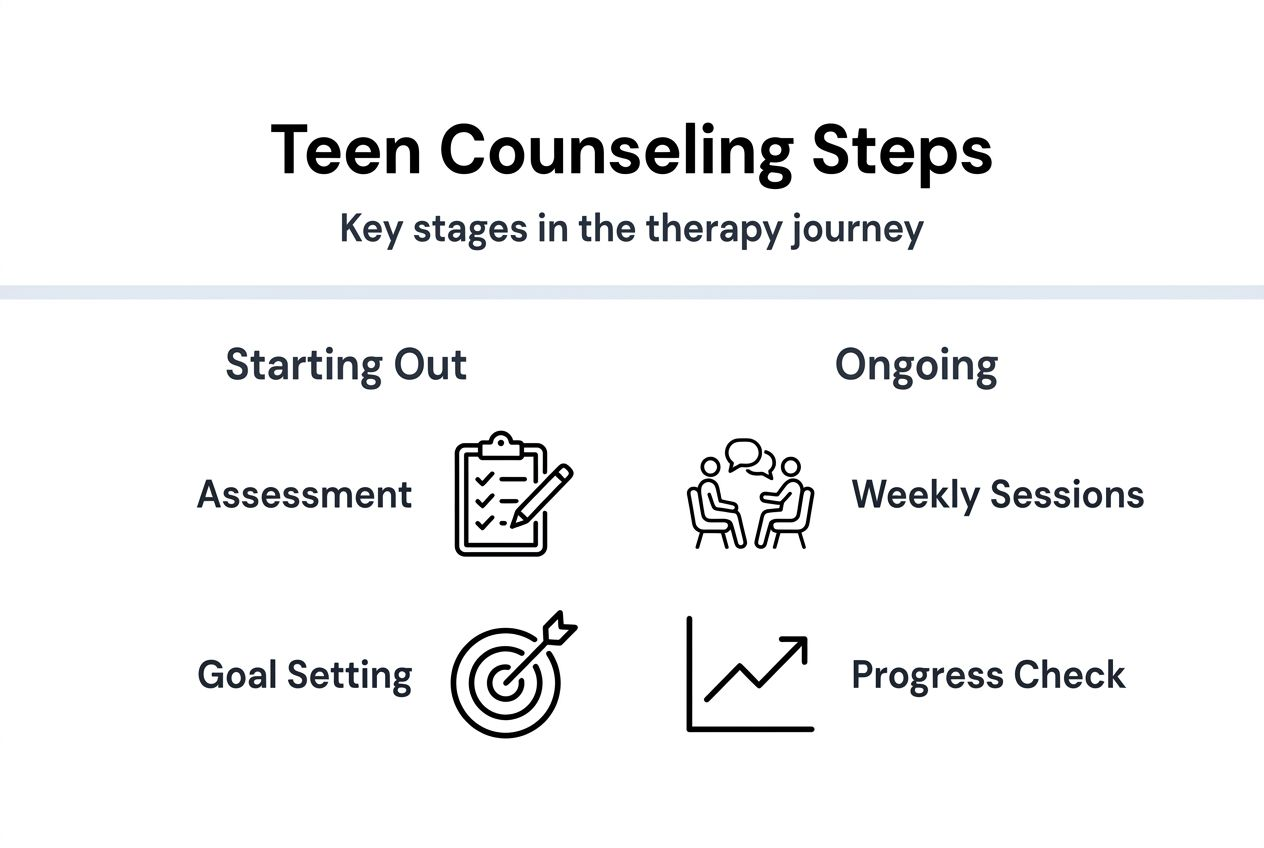
The first session focuses on comprehensive assessment. Therapists evaluate your teen’s symptoms, family history, trauma exposure, and current functioning. They conduct standardized screenings for depression, anxiety, and safety concerns. This initial meeting establishes baseline measures for tracking progress.

Consistent scheduling builds therapeutic momentum. Weekly sessions at the same day and time create routine and structure. Teens benefit from predictability, which reduces anxiety about therapy itself. Missing sessions or irregular attendance disrupts progress and weakens the therapeutic relationship.
Therapist engagement strategies matter for adolescents. Offering teens structured activity choices with brief verbal instructions improves participation. Rather than dictating the session agenda, effective therapists present two or three options and let teens choose. This autonomy increases investment in the process.
Progress tracking provides objective feedback. Most therapists use weekly rating scales where teens score their symptoms from 0 to 10. These numbers reveal patterns, identify triggers, and show whether treatment works. Parents should ask to review these ratings monthly to stay informed.
Pro Tip: Keep therapy instructions under two minutes when your teen practices new skills at home. Long explanations lose adolescent attention. Demonstrate the technique, let them try it, and provide brief feedback. This therapeutic approach for teens in California maintains focus and builds mastery.
The counseling process follows this sequence:
- Initial assessment including safety screening and symptom evaluation
- Goal setting where teen and therapist identify specific, measurable targets
- Weekly therapy sessions using evidence-based techniques like CBT or EMDR
- Between-session practice assignments to reinforce new coping skills
- Regular progress reviews using standardized rating scales and parent observations
- Adjustment of treatment approach if progress stalls or new issues emerge
Common mistakes and troubleshooting
Avoiding typical pitfalls saves time, money, and prevents your teen from giving up on therapy prematurely.
Skipping emotional preparation causes the most dropouts. Not preparing teens emotionally leads to dropout in 30% of cases according to California Health & Human Services data. Teens who feel forced into therapy or do not understand its purpose resist participation. Spend time before the first session discussing why counseling might help and what success looks like.
Inadequate safety screening risks serious harm. Some parents assume therapists will catch everything in the first session. However, teens often hide suicidal thoughts or self-harm from strangers initially. Parents must directly ask these difficult questions before therapy begins and share this information with the therapist.
Inconsistent attendance undermines treatment effectiveness. Life gets busy, but regular sessions matter more than occasional intensive work. Missing appointments breaks therapeutic momentum and prevents skill building. Prioritize therapy the same way you would medical treatment for a physical illness.
Failing to monitor progress leaves you guessing whether therapy works. Ask your teen’s therapist for monthly updates on symptom ratings and goal achievement. If you see no improvement after eight to ten sessions, discuss adjusting the treatment approach rather than continuing ineffective methods.
Pro Tip: Review therapy goals with your teen and therapist every four weeks. This check-in maintains motivation, celebrates progress, and identifies concerns early. Teens who see measurable improvement stay engaged, while those who feel stuck benefit from course corrections.
“About 30% of teens drop out early due to insufficient emotional preparation and unclear expectations. Taking time to prepare your teen emotionally reduces this risk significantly and improves long-term outcomes.” — California Health & Human Services
Watch for these warning signs:
- Your teen consistently refuses to attend or participate in sessions
- No symptom improvement appears after 10 to 12 weekly sessions
- Behaviors worsen or new concerning symptoms emerge
- The therapist rarely provides progress updates or dismisses your concerns
- Your teen reports feeling uncomfortable or misunderstood by their therapist
Expected results and outcomes
Setting realistic expectations prevents frustration and helps you recognize genuine progress when it occurs.
Symptom improvement typically occurs within 8 to 12 weekly sessions for most teens receiving evidence-based treatment. Early changes appear subtle: slightly better mood, reduced conflict, or improved sleep. Major breakthroughs take longer but build on these small wins.
Weekly rating scales provide objective progress measures. Teens rate their anxiety, depression, or trauma symptoms from 0 to 10 each session. A reduction of 2 to 3 points over eight weeks indicates meaningful improvement. Complete symptom elimination rarely happens, but significant reduction allows normal functioning.
Parents typically observe behavioral changes by two to three months. Your teen might handle stress better, communicate more openly, or show interest in previously avoided activities. These benefits of teen therapy in California appear gradually rather than overnight.
| Issue | Typical Timeline | Measurable Outcomes | Observable Changes |
|---|---|---|---|
| Anxiety | 8 to 12 weeks | Anxiety rating drops from 8/10 to 5/10 or lower | Less avoidance, better sleep, reduced physical symptoms |
| Depression | 10 to 14 weeks | Depression score improves by 40% or more | Increased energy, social engagement, emotional expression |
| Trauma/PTSD | 12 to 16 weeks | PTSD symptoms reduce by 50% or greater | Fewer nightmares, less hypervigilance, improved concentration |
Look for these signs therapy is working:
- Your teen voluntarily discusses session content or insights gained
- Symptom intensity or frequency decreases even if triggers remain
- New coping skills appear in daily life without prompting
- Your teen shows more self-awareness about emotions and reactions
- School performance or peer relationships improve
- Family conflict decreases as communication skills develop
Remember that progress is not linear. Some weeks bring setbacks, especially during stressful periods. Focus on the overall trend rather than session-to-session fluctuations. Key therapy outcomes for teens accumulate over time with consistent participation and practice.
Cost and affordability considerations
Understanding therapy costs and payment options prevents financial stress from derailing your teen’s treatment.
Session costs vary significantly across California. Licensed therapists in urban areas like San Francisco or Los Angeles typically charge $150 to $250 per session. Suburban and rural providers often charge $100 to $175. Telehealth sessions sometimes cost less since providers save overhead expenses.
Many California clinics offer sliding scale fees based on household income. These arrangements reduce session costs to $50 to $100 for families meeting income guidelines. Do not hesitate to ask about sliding scale availability during initial calls. Providers who care about accessibility make this information readily available.
Insurance coverage depends on your specific plan. Most California insurers cover mental health services under parity laws, but copays, deductibles, and session limits vary. Call your insurance company before starting therapy to understand your benefits. Ask these specific questions: What is my copay per session? How many sessions does my plan cover annually? Do I need authorization before starting?
Health Savings Accounts (HSA) and Flexible Spending Accounts (FSA) cover qualified mental health expenses. Keep receipts and documentation for tax purposes. This therapy insurance option in California stretches your healthcare dollars further.
| Payment Method | Average Cost Per Session | Advantages | Considerations |
|---|---|---|---|
| Private pay (in-person) | $150 to $250 | Immediate access, provider choice | Higher upfront cost |
| Private pay (telehealth) | $100 to $175 | Lower cost, convenience | Requires reliable internet |
| Insurance (in-network) | $20 to $50 copay | Predictable cost, wider access | Limited provider choice, authorization delays |
| Sliding scale | $50 to $100 | Affordable for low income | Must verify income eligibility |
Maximize your therapy investment:
- Verify insurance coverage and authorization requirements before scheduling
- Ask about sliding scale fees if private pay rates exceed your budget
- Use HSA or FSA funds for eligible mental health expenses
- Compare telehealth and in-person costs if both meet your teen’s needs
- Request superbills from out-of-network providers for potential reimbursement
- Prioritize consistent weekly sessions over sporadic intensive work
How Revive Health Therapy supports your teen’s journey
Starting teen counseling feels overwhelming, but you do not have to navigate this alone. Revive Health Therapy specializes in evidence-based treatment for California teens struggling with anxiety, depression, and trauma.
Our therapists use proven approaches like CBT, EMDR, and trauma-focused methods tailored specifically for adolescents. We understand teen development and create environments where young people feel heard and respected. Teen therapy services include both in-person sessions in Walnut Creek and Oakland plus statewide telehealth options.

We accept most California insurance plans and offer sliding scale fees to make accessible trauma care available regardless of income. Our team takes time to match your teen with the right therapist based on their specific needs and personality. Initial consultations help us understand your family’s situation and recommend the best path forward.
Discover the benefits of psychotherapy in California through personalized care that puts your teen’s wellbeing first. Contact us today to schedule a consultation and take the first step toward healing.
Frequently asked questions about starting teen counseling
What information can my teen’s therapist share with me as a parent?
California law gives teens ages 12 and older confidentiality rights in therapy. Therapists must keep session content private unless your teen poses danger to themselves or others. However, therapists typically share general progress updates without revealing specific conversations. Discuss confidentiality boundaries during the first session.
How do I handle my teen’s resistance to starting therapy?
Avoid forcing therapy, which increases resistance. Instead, have honest conversations about your concerns and ask what support they need. Offer choices like picking their therapist or choosing telehealth versus in-person. Sometimes meeting the therapist for a brief consultation reduces anxiety. Frame therapy as a resource for them, not punishment.
What should I do if my teen’s symptoms worsen during counseling?
Contact the therapist immediately to discuss symptom changes. Sometimes therapy temporarily increases distress as teens process difficult emotions. However, persistent worsening requires treatment adjustment. The therapist may need to slow the pace, add safety planning, or refer to a higher level of care like intensive outpatient programs.
How long does insurance authorization for teen therapy typically take?
Most California insurers provide authorization within 3 to 5 business days for routine mental health care. Crisis situations receive faster approval. Submit authorization requests as soon as you schedule the first appointment. Some plans allow a certain number of sessions before requiring authorization, so verify your specific coverage.
How can I support my teen emotionally between therapy sessions?
Create a judgment-free space for your teen to share feelings without immediately problem solving. Practice active listening by reflecting what you hear before offering advice. Encourage use of coping skills learned in therapy without nagging. Maintain normal routines and expectations while showing extra patience during difficult periods. Your steady presence matters more than perfect responses.
Recommended
- 7 Key Benefits of Teen Counseling for California Families – ReviveHealthTherapy
- Teen Therapy: Key Benefits for California Families – ReviveHealthTherapy
- Role of Family Therapy for Teens: Enhancing Communication and Wellbeing – ReviveHealthTherapy
- Therapy for Teens: Key Approaches and Real Impact – ReviveHealthTherapy
One Response