
Many people experiencing depression believe therapy takes years to work or only masks symptoms temporarily. In reality, Cognitive Behavioral Therapy targets negative thinking patterns and behaviors to create lasting change in relatively few sessions. This evidence-based approach has helped millions reduce depression symptoms through structured techniques that address the root causes of emotional distress. Whether you’re newly diagnosed or have struggled for years, understanding how CBT works can help you make informed decisions about your mental health treatment. This guide breaks down what CBT involves, why it’s effective, how it compares to other therapies, and how California residents can access quality care today.
Table of Contents
- What Is Cognitive Behavioral Therapy And How Does It Work?
- How Effective Is Cbt For Depression? Evidence And Expert Insights
- Addressing Complexities: Treatment-Resistant Depression And Expert Nuances
- Accessing Cbt For Depression In California: Modern Options And Guidelines
- Find Expert Cbt Therapy In California With Revive Health Therapy
- Frequently Asked Questions
Key takeaways
| Point | Details |
|---|---|
| CBT targets thinking patterns | The therapy focuses on identifying and changing negative thoughts and behaviors that fuel depression. |
| Structured short-term treatment | Most people complete CBT in 11 to 20 sessions with measurable symptom improvement. |
| Strong scientific backing | Research shows medium to large effect sizes and better long-term outcomes than medication alone. |
| Personalization matters | Treatment-resistant cases benefit from tailored approaches combining mindfulness or neuromodulation. |
| California access expanding | Telehealth and evidence-based providers make CBT widely available across the state. |
What is cognitive behavioral therapy and how does it work?
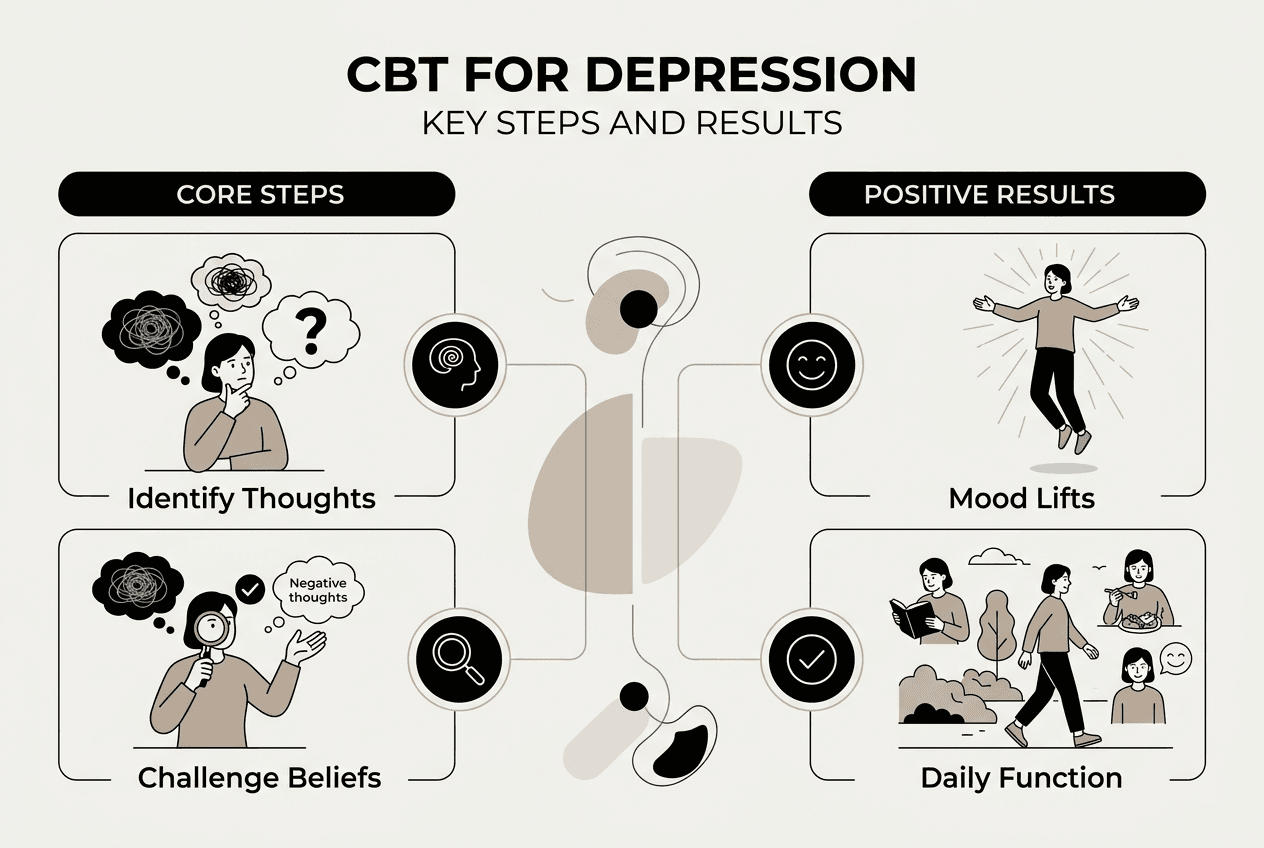
Cognitive Behavioral Therapy is a structured, time-limited, skills-based therapy that targets negative thinking patterns and maladaptive behaviors to alleviate depression symptoms. Unlike open-ended talk therapy, CBT operates on the principle that our thoughts, feelings, and behaviors are interconnected. When you change distorted thinking, your emotions and actions shift in positive directions.
The therapy zeroes in on cognitive distortions, which are exaggerated or irrational thought patterns that worsen depression. Common examples include catastrophizing (assuming the worst will happen), all-or-nothing thinking (seeing situations in black and white), and personalization (blaming yourself for things outside your control). Your therapist helps you recognize these patterns as they occur and replace them with more balanced, realistic thoughts.
CBT employs several core techniques to break the depression cycle:
- Cognitive restructuring examines the evidence for and against negative thoughts, then develops alternative interpretations
- Behavioral activation schedules pleasant or meaningful activities to counteract withdrawal and low motivation
- Problem-solving training builds skills to address life stressors contributing to depression
- Relaxation and mindfulness exercises reduce physical tension and improve emotional regulation
Most CBT courses run between 11 and 20 sessions, delivered weekly in individual or group formats. Sessions typically last 50 minutes and follow a predictable structure: reviewing homework, setting an agenda, working on current challenges, and assigning new practice exercises. Homework is central to CBT’s effectiveness because it transfers skills from the therapy room into daily life.
California residents can access CBT through in-person sessions or online therapy in California, which offers flexibility for those balancing work or family commitments. Group CBT provides peer support and costs less than individual sessions, though individual therapy allows deeper personalization.
Pro Tip: Completing homework assignments between sessions accelerates your progress significantly, but don’t stress if you miss one occasionally. The therapeutic relationship and your comfort with the therapist matter more than perfect adherence to every exercise.
How effective is CBT for depression? Evidence and expert insights
The scientific case for CBT rests on decades of rigorous research. Meta-analyses show medium to large effect sizes ranging from 0.5 to over 1.0, meaning CBT produces clinically meaningful symptom reduction. In controlled trials, 42% of CBT participants achieved response (at least 50% symptom reduction) compared to just 19% of control groups. These numbers translate to a number needed to treat of about four, which is considered excellent in psychotherapy research.

What sets CBT apart is its durability. While antidepressants often require ongoing use to maintain benefits, CBT teaches skills that continue working after therapy ends. Studies tracking patients 6 to 12 months post-treatment consistently find that CBT provides superior long-term outcomes compared to medication alone. People who complete CBT experience lower relapse rates because they’ve internalized strategies to catch and challenge depressive thinking before it spirals.
CBT also reduces comorbid symptoms that frequently accompany depression. Research shows significant decreases in anxiety and stress levels alongside mood improvements. This makes sense given that many cognitive distortions fuel both depression and anxiety disorders.
“CBT demonstrates robust effectiveness across diverse populations and settings, with sustained benefits extending well beyond active treatment. The evidence base supports it as a first-line intervention for major depression.”
Here’s a snapshot of key research findings:
| Measure | CBT Performance | Comparison |
|---|---|---|
| Effect size | 0.5 to 1.0+ (medium to large) | Antidepressants: 0.3 to 0.5 |
| Response rate | 42% achieve 50%+ symptom reduction | Control groups: 19% |
| Long-term benefit | Sustained 6 to 12 months post-treatment | Medication: benefits end when stopped |
| Comorbid symptoms | Reduces anxiety and stress significantly | Medication: limited cross-symptom effect |
Experts emphasize that meaningful improvement typically means at least a 50% reduction in depression severity scores on standardized measures. Many patients report even greater gains, particularly when they practice skills consistently and maintain positive lifestyle changes initiated during therapy.
For California residents seeking evidence-based depression treatment, these findings provide confidence that CBT offers real, lasting relief grounded in science rather than guesswork.
Addressing complexities: treatment-resistant depression and expert nuances
Not everyone responds fully to standard CBT protocols. Treatment-resistant depression (TRD) affects roughly 30% of people with major depression who don’t achieve remission after two or more adequate treatment trials. For these individuals, standard CBT may be insufficient on its own, but that doesn’t mean cognitive-behavioral approaches are useless.
Advanced adaptations can make CBT more effective for difficult cases. Mindfulness-based cognitive therapy (MBCT) combines traditional CBT with meditation practices that help people observe thoughts without judgment. This meta-awareness prevents rumination, a key driver of persistent depression. Acceptance and commitment therapy (ACT) similarly teaches psychological flexibility, encouraging people to pursue valued actions even while experiencing difficult emotions.
Cognitive remediation addresses the attention and memory problems that often accompany severe depression. By improving cognitive functioning, patients become better able to engage with CBT techniques. Some therapists also incorporate behavioral experiments that directly test negative predictions, providing powerful experiential evidence against depressive beliefs.
For the most severe TRD cases, CBT combines with neuromodulation therapies like transcranial magnetic stimulation (TMS), electroconvulsive therapy (ECT), or deep brain stimulation (DBS). These medical interventions alter brain activity patterns, while CBT helps patients develop healthier thinking habits to maintain gains. Research shows CBT remains beneficial even after procedures like DBS or ECT, helping prevent relapse.
Personalization is critical when standard protocols fall short. Cookie-cutter CBT delivered rigidly from a manual often underperforms compared to therapy tailored to your specific symptoms, life circumstances, and learning style. Your therapist should:
- Assess which cognitive distortions are most problematic for you personally
- Adapt homework assignments to fit your schedule and preferences
- Address trauma or other complicating factors alongside depression
- Adjust the pace based on your progress and feedback
The therapeutic alliance, your collaborative relationship with your therapist, predicts outcomes as strongly as the specific techniques used. Qualities like empathy, trust, and genuine understanding create a safe space for difficult work. If you don’t feel heard or supported, even the most evidence-based protocol won’t reach its full potential.
California residents exploring psychotherapy options California 2026 should prioritize finding a therapist who balances fidelity to CBT principles with flexibility to meet your unique needs.
Pro Tip: Don’t hesitate to discuss what’s working and what isn’t with your therapist. Good CBT therapists welcome feedback and adjust their approach accordingly. The alliance matters more than perfect technique.
Accessing CBT for depression in California: modern options and guidelines
California residents benefit from strong institutional support for evidence-based mental health care. The California Evidence-Based Clearinghouse rates CBT as well-supported for depression treatment, and the approach aligns with American Psychological Association (APA) and National Institute for Health and Care Excellence (NICE) clinical guidelines. This means insurance companies and healthcare systems increasingly recognize CBT as a first-line treatment.
Telehealth has transformed access to quality therapy. Since the pandemic, California providers have expanded telehealth mental health California services dramatically, allowing you to connect with specialized CBT therapists regardless of your location. Video sessions deliver outcomes comparable to in-person therapy for most people, while eliminating travel time and expanding your pool of potential providers.
Online therapy platforms and apps now offer CBT-based programs with varying levels of therapist involvement. Fully automated programs cost less but lack personalization. Therapist-guided online CBT combines affordability with professional support, often at lower rates than traditional face-to-face sessions. For severe depression, however, real-time interaction with a licensed therapist remains the gold standard.
Here’s how to find and begin CBT in California:
- Search for licensed therapists with specific CBT training through directories like Psychology Today, TherapyDen, or your insurance provider’s network
- Verify credentials by checking the California Board of Behavioral Sciences license lookup to confirm active licensure and any disciplinary history
- Contact your insurance to understand mental health benefits, copays, and whether prior authorization is required for psychotherapy
- Schedule initial consultations with two or three therapists to assess fit, asking about their CBT experience, typical treatment length, and approach to homework
- Commit to the process by attending sessions consistently, completing assignments, and communicating openly about your progress and concerns
Insurance coverage varies widely, but most California plans cover mental health services under parity laws requiring equal treatment of physical and mental health conditions. Typical copays range from $20 to $50 per session for in-network providers. Out-of-network therapists may cost $150 to $250 per session, though some offer sliding-scale fees based on income.
Community mental health centers and university training clinics provide lower-cost CBT delivered by supervised graduate students or postdoctoral fellows. These settings offer quality care at reduced rates, though you may experience therapist transitions as trainees complete their programs.
For comprehensive information on therapy accessibility in California, explore resources that explain insurance navigation, financial assistance programs, and how to advocate for coverage when claims are denied.
Find expert CBT therapy in California with Revive Health Therapy
If you’re ready to experience the benefits of evidence-based CBT, Revive Health Therapy offers personalized treatment designed around your unique needs and goals. Our California-licensed therapists specialize in cognitive-behavioral approaches for depression, anxiety, trauma, and relationship challenges, delivering care that aligns with APA guidelines and state standards.
We provide both in-person sessions at our Walnut Creek and Oakland locations and secure telehealth appointments throughout California, giving you flexibility to choose what works best for your schedule. Whether you’re exploring why seek psychotherapy in California for the first time or looking for a therapist who truly understands your struggles, our team combines clinical expertise with genuine compassion. Learn more about our online therapy in California options or review comprehensive details on psychotherapy evidence and options California to find the right fit for your journey toward lasting wellness.
Frequently asked questions
Is CBT effective for all types of depression?
CBT effectively treats mild to moderate depression and shows good results for severe depression when combined with other interventions. However, treatment-resistant cases may require augmentation with mindfulness techniques, medication, or neuromodulation therapies. The therapy works best when tailored to your specific symptoms and life circumstances rather than applied as a one-size-fits-all protocol.
How long does CBT treatment for depression usually last?
CBT typically spans 11 to 20 weekly sessions, delivered in either individual or group formats. Duration depends on depression severity, how quickly you learn and apply skills, and whether other issues like trauma or anxiety need attention. Some people notice improvement within the first month, while others require the full course to achieve lasting change.
What role does homework play in CBT success?
Homework assignments are central to CBT effectiveness because they transfer skills from therapy sessions into your daily life. Practicing thought records, behavioral activation exercises, and problem-solving between sessions reinforces new patterns and accelerates progress. Research shows people who complete homework consistently experience better outcomes and maintain gains longer after therapy ends.
Can CBT be combined with other treatments for depression?
Yes, CBT often complements antidepressants, mindfulness practices, or brain stimulation therapies for resistant cases. Combining CBT with medications or neuromodulation improves outcomes beyond either treatment alone, particularly for severe or chronic depression. Your healthcare team can help determine whether combination treatment makes sense for your situation.
How can I find a qualified CBT therapist in California?
Search for state-licensed therapists with specific CBT training through professional directories or your insurance network. Verify credentials using the California Board of Behavioral Sciences license lookup and confirm the therapist’s experience treating depression. Use therapy accessibility in California resources to understand insurance coverage and explore telehealth platforms for broader access to specialized providers.
Recommended
- Depression Treatment: Evidence-Based Solutions That Work – ReviveHealthTherapy
- Therapeutic modalities explained: 35% better outcomes in 2026 – ReviveHealthTherapy
- Role of psychotherapy in mental health: proven benefits 2026 – Revive Health Therapy
- Role of Mindfulness in Therapy: Real Impact on Anxiety and Depression – ReviveHealthTherapy
2 Responses