
Many couples believe therapy is reserved for relationships on the brink of collapse, yet research shows that 50% of couples report improved satisfaction even when one partner initially hesitates. Marriage and family therapists help couples strengthen their relationships through evidence-based methods that address communication, emotional connection, and conflict resolution. Whether you’re seeking to enhance an already healthy marriage or navigate specific challenges, professional therapy offers structured support tailored to your unique relational needs.
Table of Contents
- Introduction To The Role Of Therapists In Marriage Health
- Therapeutic Approaches Used In Marriage Therapy
- How Therapists Improve Communication, Conflict Resolution, And Emotional Intimacy
- Common Misconceptions About Marriage Therapy
- How To Engage Effectively With A Therapist And What To Expect
- Discover Expert Marriage Therapy To Transform Your Relationship
- Frequently Asked Questions
Key takeaways
| Point | Details |
|---|---|
| Evidence-based methods | Therapists use CBT, EFT, and mindfulness to improve communication, emotional regulation, and intimacy in relationships. |
| Systemic approach | Therapy treats the couple as a system, addressing relational dynamics rather than individual issues in isolation. |
| Therapeutic alliance matters | The quality of the therapist-client relationship predicts up to 70% of successful outcomes in marriage therapy. |
| Misconceptions limit access | Many couples delay therapy believing it’s only for crisis situations, missing preventive benefits. |
| Efficient treatment | Marriage therapy averages 12 sessions, typically shorter than individual therapy while addressing relational health effectively. |
Introduction to the role of therapists in marriage health
Marriage and family therapy represents a specialized mental health profession that treats emotional disorders within relational contexts rather than focusing solely on individuals. This systemic approach recognizes that relationship dynamics, communication patterns, and emotional connections directly influence both partners’ mental health and overall marital satisfaction. Therapists trained in this field view couples as interconnected systems where one partner’s experiences, behaviors, and emotional states affect the other.
Unlike individual therapy that explores personal history and internal struggles, marriage therapy examines how partners interact, resolve conflicts, and maintain emotional intimacy. The relational context shapes treatment goals and interventions. Sessions typically average around 12, making this approach more efficient than traditional individual counseling for relationship concerns. This efficiency stems from addressing issues at their relational source rather than treating symptoms in isolation.
Marriage therapists focus on several core areas that directly impact relationship health:
- Communication skills development including active listening and expressing needs clearly
- Conflict resolution strategies that reduce destructive patterns and build cooperative problem solving
- Emotional intimacy enhancement through vulnerability, trust building, and affection expression
- Relationship dynamics assessment to identify power imbalances or unhealthy interaction cycles
- External stressor management affecting the couple’s connection and stability
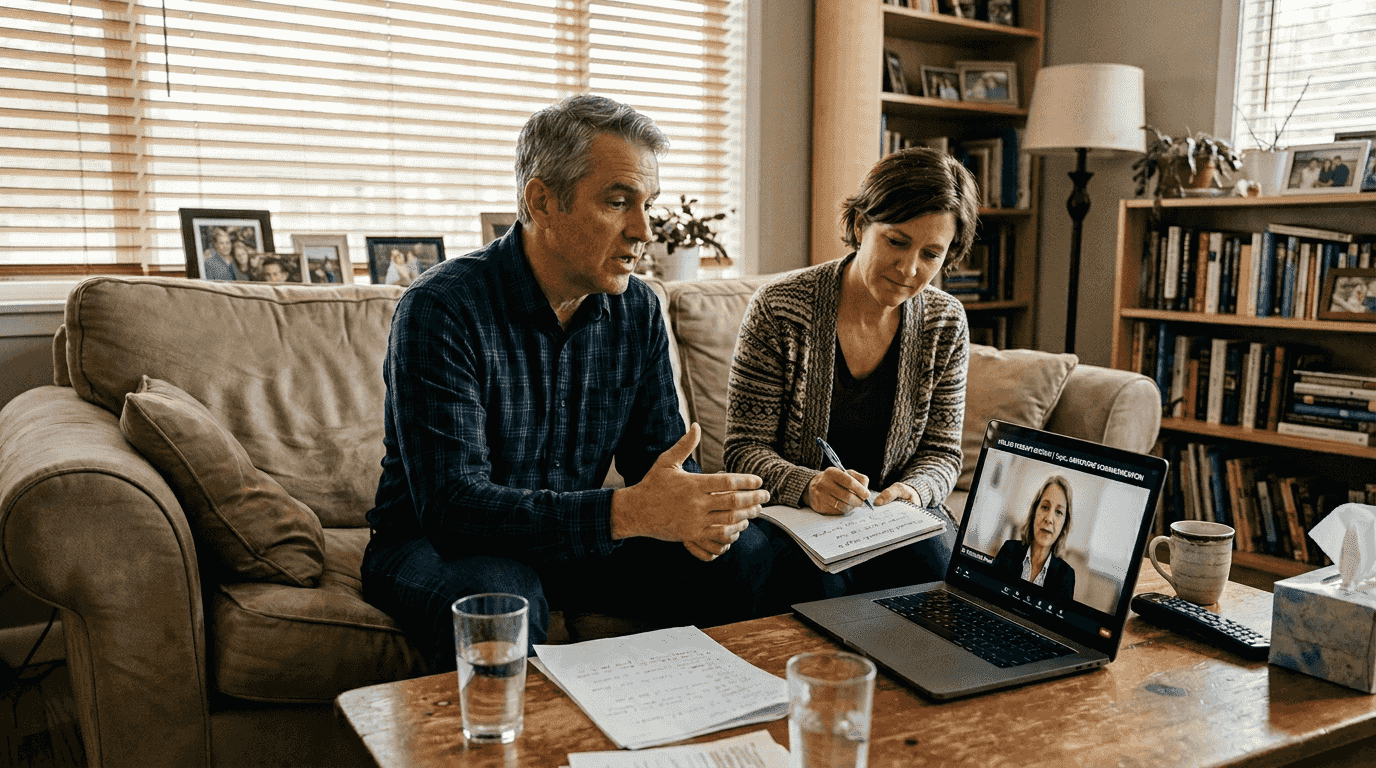
California couples can access marriage therapy through telehealth platforms or in-person sessions, with licensed Marriage and Family Therapists (MFTs) providing specialized care. Understanding what relationship counseling entails helps couples set realistic expectations and engage more effectively from the first session.
Therapeutic approaches used in marriage therapy
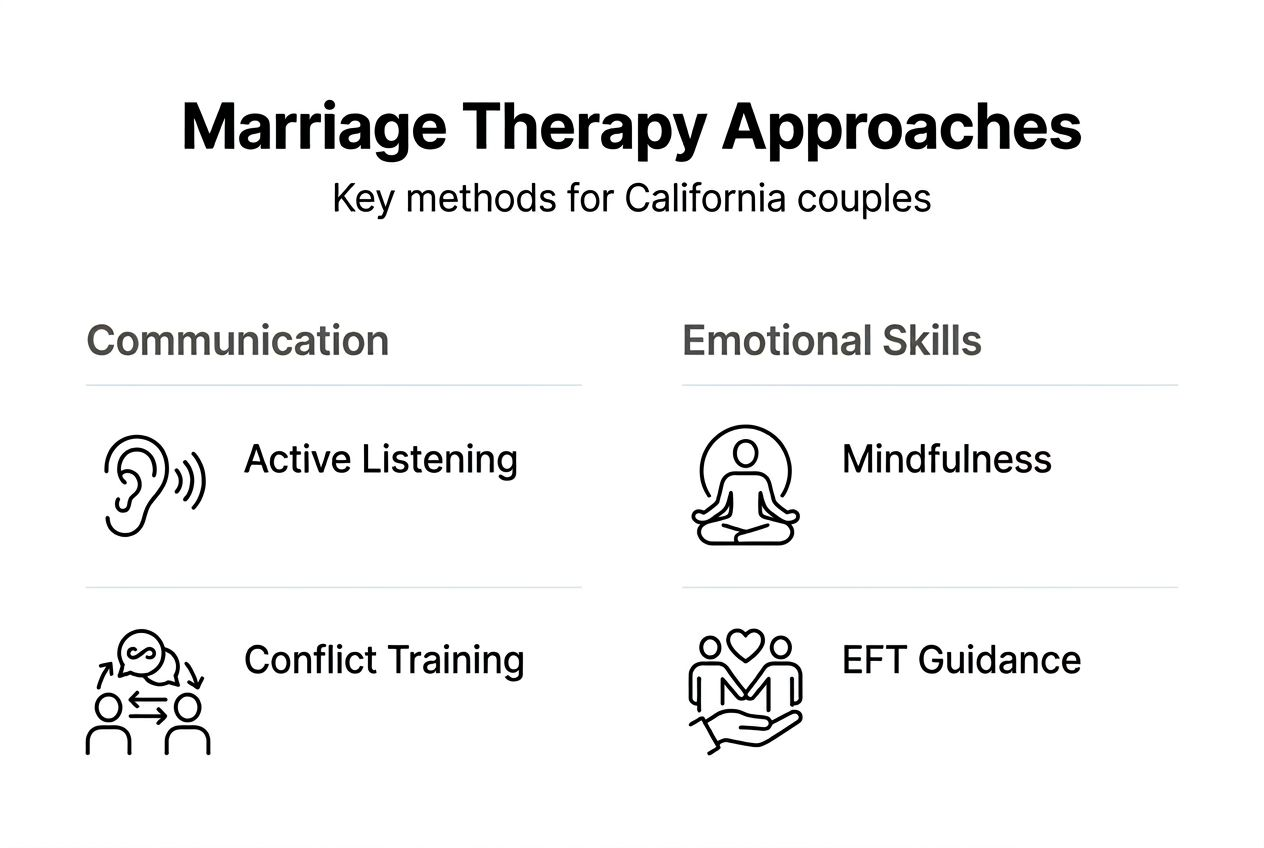
Marriage therapists employ multiple evidence-based methodologies tailored to each couple’s specific challenges and goals. Cognitive Behavioral Therapy (CBT) helps partners identify and modify negative thought patterns that fuel misunderstandings and conflicts. Through CBT, couples learn to recognize automatic negative assumptions about their partner’s intentions and replace them with more balanced, accurate interpretations. This cognitive restructuring dramatically improves communication quality and reduces unnecessary arguments.
Emotionally Focused Therapy (EFT) addresses attachment needs and emotional bonding between partners. EFT therapists help couples understand their attachment styles and how unmet emotional needs create distance or conflict. By creating safe spaces for vulnerability, partners reconnect emotionally and rebuild trust. Research shows therapists use CBT, EFT, and mindfulness interventions to enhance couples’ communication, emotional regulation, and conflict resolution skills.
Mindfulness-based interventions teach couples present-moment awareness and emotional regulation. When partners practice mindfulness together, they become more attuned to their own emotional states and their partner’s needs. This heightened awareness prevents reactive responses during disagreements and fosters compassionate understanding. Mindfulness supports healthier interactions by creating space between emotional triggers and behavioral responses.
Trauma-informed care has become increasingly important in marriage therapy. Marriage therapy often integrates trauma-informed approaches for couples where past trauma impacts current relationship functioning. Addressing trauma reduces conflicts by up to 40% when one or both partners carry unresolved wounds. Therapists trained in trauma work help couples understand how past experiences shape present reactions and develop healing strategies together.
Pro Tip: Seek therapists trained in multiple modalities who can adapt their approach to your couple’s evolving needs rather than applying a one-size-fits-all method.
California couples benefit from exploring various therapeutic modalities to understand which approach aligns best with their relationship goals. Finding accessible trauma care therapists becomes crucial when past experiences affect current relationship dynamics. Understanding therapy’s role in trauma recovery helps couples recognize how healing individual wounds strengthens their partnership. The impact of mindfulness in therapy extends beyond sessions into daily interactions and conflict management.
| Therapy Type | Primary Focus | Typical Session Range | Key Outcomes |
|---|---|---|---|
| CBT | Thought patterns, communication skills | 12-16 sessions | Reduced negative interactions, improved problem solving |
| EFT | Emotional bonding, attachment security | 15-20 sessions | Enhanced intimacy, emotional connection, trust |
| Mindfulness | Present awareness, emotional regulation | 10-14 sessions | Better stress management, reduced reactivity |
| Trauma-informed | Past trauma impact on relationship | 16-24 sessions | Decreased conflict, increased safety, healing |
Additional resources from Harvard Health on couples therapy research and Syracuse University’s marriage therapy education programs provide deeper insights into these evidence-based approaches.
How therapists improve communication, conflict resolution, and emotional intimacy
Therapists actively teach communication skills that transform how couples understand and respond to each other. Active listening exercises help partners truly hear their spouse’s perspective without immediately defending or problem solving. Therapists model and coach empathetic responses, teaching couples to validate feelings even during disagreements. These skills become second nature with consistent practice, creating lasting changes in daily interactions.
Conflict resolution training equips couples with sustainable techniques for navigating disagreements constructively. Therapists introduce structured approaches like time-outs when conversations escalate, fair fighting rules that prevent personal attacks, and collaborative problem solving frameworks. Couples learn to distinguish between solvable problems requiring compromise and perpetual differences requiring acceptance. This clarity reduces frustration and helps partners choose appropriate strategies for each conflict type.
Emotional intimacy rebuilding occurs through focused exercises addressing vulnerability, trust, and affection. Therapists guide partners in sharing fears, hopes, and needs in safe therapeutic environments before practicing at home. Structured connection activities like daily check-ins or weekly date nights maintain emotional closeness between sessions. Emotional regulation skills prevent minor irritations from escalating into relationship-threatening conflicts.
The therapeutic alliance between therapist and couple predicts up to 70% of variance in therapy success. When couples feel genuinely understood, respected, and supported by their therapist, they engage more fully in difficult therapeutic work. This relationship quality matters more than specific techniques used.
“The therapeutic relationship’s strength determines whether couples persist through challenging moments in therapy and successfully implement new skills at home. Trust in your therapist creates the foundation for meaningful relationship transformation.”
Therapists help couples cope with external stressors affecting their marriage including work pressures, financial concerns, parenting challenges, and societal expectations. Recent years brought unique stressors like pandemic isolation and economic uncertainty that strained many relationships. Therapists provide perspective and coping strategies for managing these external pressures without letting them erode the couple’s connection.
Pro Tip: Prioritize openness about your relationship challenges and attend sessions consistently, even when uncomfortable, to maximize therapy’s effectiveness and accelerate positive changes.
California couples seeking flexible support can explore telehealth marriage therapy options that eliminate commute barriers and scheduling conflicts. Understanding the full benefits of couples counseling helps partners commit to the therapeutic process with realistic expectations. Research on therapeutic relationship importance underscores why finding the right therapist match significantly impacts outcomes.
- Therapists teach specific communication techniques including reflective listening and assertive expression
- Conflict resolution frameworks provide structured approaches to disagreements and problem solving
- Emotional intimacy exercises rebuild connection through vulnerability and trust restoration
- Strong therapeutic alliances create safe spaces for couples to address difficult relationship issues
- External stressor management prevents outside pressures from damaging the couple’s bond
Common misconceptions about marriage therapy
Many couples mistakenly believe therapy is only for marriages in severe crisis or headed toward divorce. This misconception prevents partners from seeking preventive support that could address small issues before they become relationship-threatening problems. Research demonstrates therapy benefits couples at various relationship stages, from newlyweds establishing healthy patterns to long-married partners seeking renewed connection. Early intervention often requires fewer sessions and produces faster results than crisis intervention.
Another widespread myth suggests both partners must be equally motivated for therapy to succeed. While mutual enthusiasm helps, approximately 50% of couples report improved satisfaction even when one partner initially hesitates. The willing partner’s engagement often inspires the reluctant spouse to participate more fully as they observe positive changes. Therapists skilled in motivation enhancement can help hesitant partners recognize therapy’s potential benefits.
Some couples expect therapists to assign blame or take sides during conflicts. Effective marriage therapists maintain neutrality while helping both partners understand their contributions to relationship patterns. The focus remains on system dynamics rather than individual faults. This balanced approach allows both partners to feel heard and supported rather than judged or criticized.
“Marriage therapy is solution focused and time limited, typically lasting around 12 sessions. Couples actively practice new skills between sessions rather than passively receiving advice, making therapy a collaborative growth process requiring commitment from both partners.”
Unrealistic expectations about therapy’s passive nature disappoint some couples. Successful therapy requires active participation, homework completion, and genuine willingness to change established patterns. Therapists provide frameworks and guidance, but couples do the relationship work. Sessions serve as coaching and accountability rather than magical fixes applied by therapists alone.
Three major misconceptions and their corrections:
- Misconception: Therapy only helps couples on the verge of separation. Reality: Preventive therapy strengthens healthy relationships and addresses minor issues before they escalate into major conflicts.
- Misconception: Both partners must want therapy equally for it to work. Reality: Many couples achieve significant improvements even when one partner starts reluctantly, as positive changes inspire increased engagement.
- Misconception: Therapists tell couples what to do and fix problems for them. Reality: Therapists teach skills and facilitate understanding, but couples actively practice new behaviors and make relationship decisions themselves.
Understanding why couples seek counseling helps normalize therapy as a proactive relationship investment rather than a last resort. Learning about relationship counseling’s true benefits dispels myths and sets realistic expectations. Additional research from Harvard Health addressing therapy misconceptions provides evidence-based insights into what actually predicts successful outcomes.
How to engage effectively with a therapist and what to expect
Selecting the right therapist significantly impacts treatment success and satisfaction. Look for licensed Marriage and Family Therapists (MFTs) with specific training in evidence-based approaches like CBT, EFT, or trauma-informed care. California’s licensing requirements ensure MFTs complete rigorous education and supervised clinical hours before practicing independently. Check therapist credentials through state licensing boards and read client reviews to assess communication style and approach alignment with your needs.
Setting clear, measurable therapy goals during initial sessions creates direction and allows progress tracking. Effective goals specify observable changes rather than vague desires. Instead of “improve communication,” a measurable goal states “reduce interrupting during conversations and practice reflective listening three times weekly.” Therapists help couples refine broad intentions into specific, achievable objectives that guide treatment planning.
Consistent engagement through regular attendance produces the best outcomes. Most couples attend 10 to 20 sessions depending on issue complexity and goals. Weekly sessions during intensive phases maintain momentum and allow skill practice between appointments. As progress occurs, session frequency may decrease to biweekly or monthly maintenance visits. Canceling or rescheduling frequently disrupts therapeutic progress and extends overall treatment duration.
The therapy process follows a structured yet flexible sequence:
- Initial assessment: Therapists gather relationship history, identify current concerns, and understand each partner’s perspective and goals.
- Goal setting: Couples collaborate with therapists to establish clear, achievable objectives that guide treatment focus and measure progress.
- Skill building: Therapists teach communication techniques, conflict resolution strategies, and emotional regulation tools through modeling and practice.
- Intervention implementation: Couples practice new skills in sessions and at home, reporting successes and challenges to refine approaches.
- Progress review: Regular check-ins assess goal achievement and adjust treatment plans based on evolving needs and circumstances.
- Termination planning: As couples master skills and achieve goals, therapists help plan for maintaining improvements and handling future challenges independently.
Pro Tip: Research potential therapists’ credentials, specializations, and client reviews before scheduling consultations to ensure their expertise matches your couple’s specific needs and communication preferences.
Maintaining openness about difficult topics and genuine commitment to implementing changes enhances therapy effectiveness dramatically. Couples who complete assigned homework and practice skills between sessions progress faster than those who limit work to session time alone. Vulnerability during therapy, while uncomfortable initially, creates opportunities for deeper understanding and connection that transform relationships.
California couples can explore how to find accessible trauma care therapists when past experiences affect relationship dynamics. Understanding why seeking psychotherapy in California benefits mental health provides broader context for therapy’s role in wellness. Licensed MFTs bring specialized training that addresses relationship systems effectively, making credential verification an important selection step.
Discover expert marriage therapy to transform your relationship
Strengthening your marriage through professional support creates lasting positive changes in communication, intimacy, and conflict resolution. Revive Health Therapy offers licensed Marriage and Family Therapists specializing in evidence-based approaches tailored to California couples’ unique needs. Our therapists integrate trauma-informed care with proven methodologies like CBT, EFT, and mindfulness to address your specific relationship challenges.
Accessible telehealth options throughout California provide flexible scheduling that accommodates busy couples’ lives without sacrificing quality care. Whether you’re addressing current conflicts, healing from past trauma, or proactively strengthening an already healthy relationship, our experienced therapists guide you toward meaningful growth. Early intervention with skilled professionals prevents minor issues from escalating into relationship-threatening patterns.
Explore evidence-based therapy outcomes and discover how specialized approaches create measurable improvements in relationship satisfaction. Our commitment to accessible trauma care ensures couples receive comprehensive support addressing both current dynamics and underlying wounds. Contact Revive Health Therapy today to schedule your initial consultation and begin transforming your marriage through expert therapeutic guidance.
Frequently asked questions
What qualifications should a marriage therapist have?
Look for licensed Marriage and Family Therapists (MFTs) who completed accredited graduate programs and supervised clinical hours. Verify their credentials through California’s licensing board and seek therapists with specialized training in evidence-based methods like CBT, EFT, or trauma-informed care. Check client reviews and ask about their experience working with couples facing challenges similar to yours.
How long does marriage therapy usually take?
Marriage therapy averages about 12 sessions, typically fewer than individual therapy while effectively addressing relational health. Duration varies based on issue complexity and couple goals, usually ranging between 10 and 20 sessions. Weekly attendance during intensive phases accelerates progress, with session frequency decreasing as couples master new skills and achieve their objectives.
Can therapy help if only one partner wants it?
Therapy benefits couples even when only one partner initially commits to the process. Approximately 50% of couples experience improved satisfaction despite one partner’s initial reluctance. The willing partner’s engagement and visible positive changes often inspire the hesitant spouse to participate more fully as therapy progresses. Learn more from Harvard Health’s therapy attendance research.
What should couples expect in their first therapy session?
The initial session includes comprehensive assessment of your relationship history, current concerns, and individual perspectives on challenges. Therapists explain confidentiality policies, therapy processes, and establish clear expectations for participation and homework. You’ll collaborate on setting specific, measurable goals that guide treatment focus and help track progress throughout therapy. This foundation session typically lasts 60 to 90 minutes and creates the roadmap for your therapeutic journey together.
Recommended
- Telehealth Marriage Therapy: Improving Couples’ Connections – ReviveHealthTherapy
- Step by step therapy guide for Californians 2026 – ReviveHealthTherapy
- How to Choose a Therapist in California for Lasting Change – ReviveHealthTherapy
- 7 Essential Tips for Choosing a Therapist in California – ReviveHealthTherapy
One Response